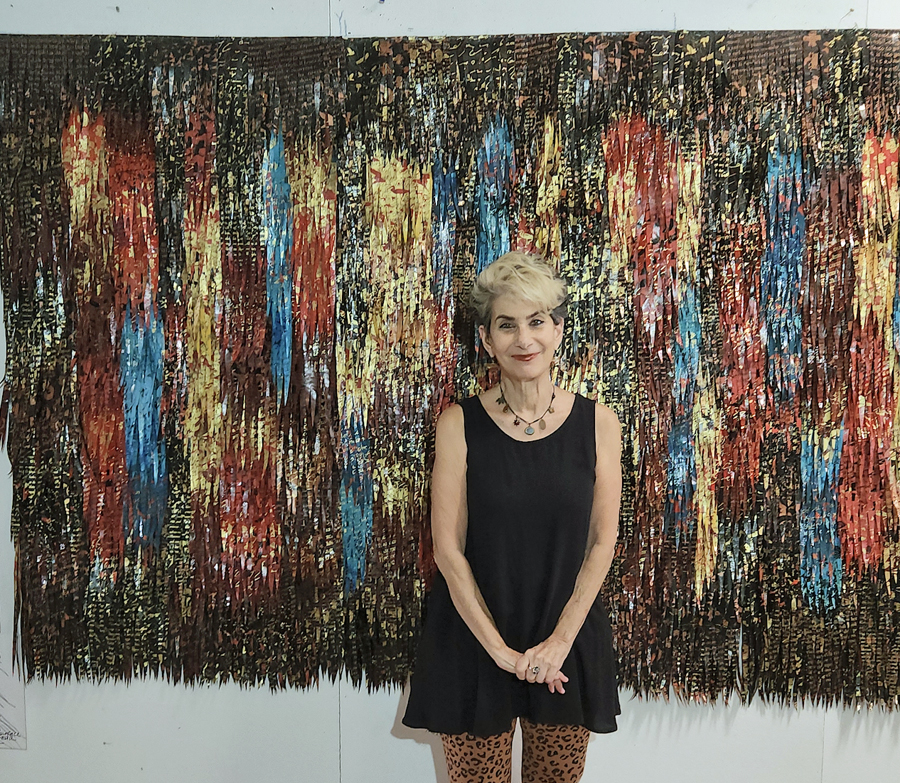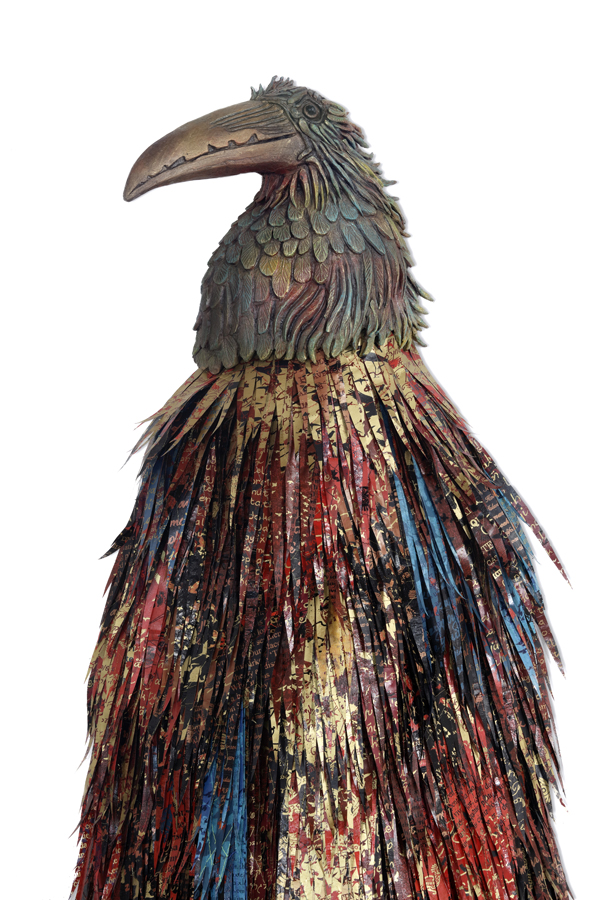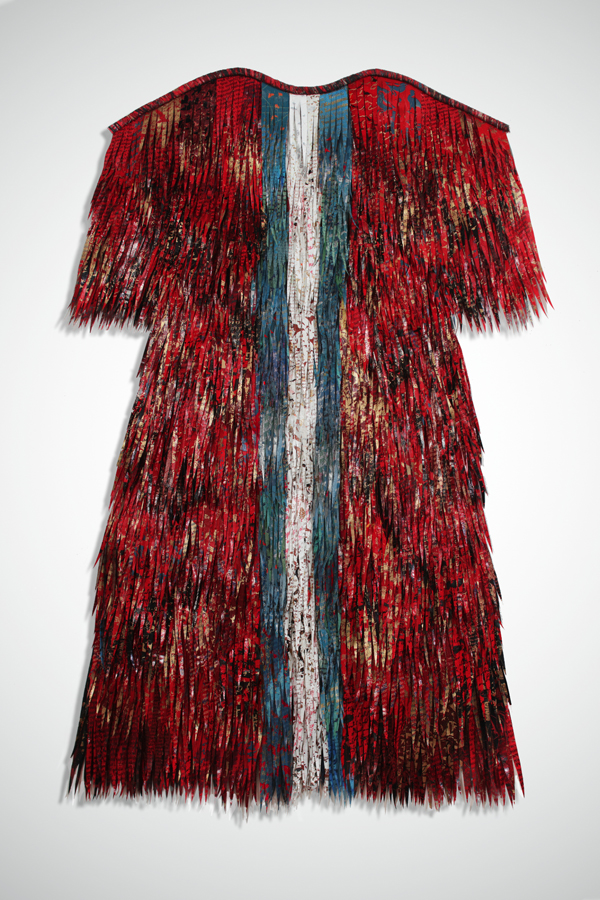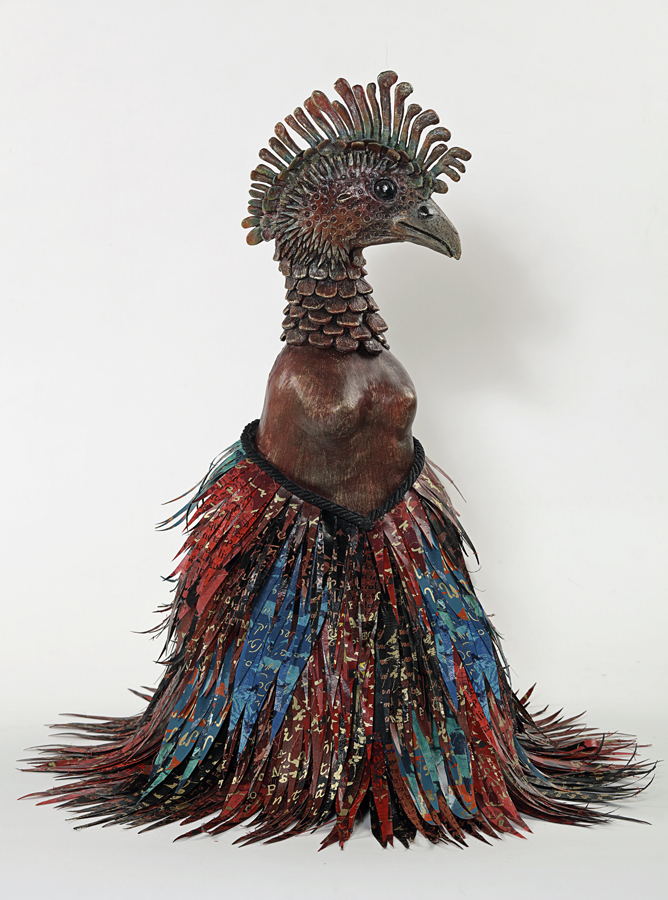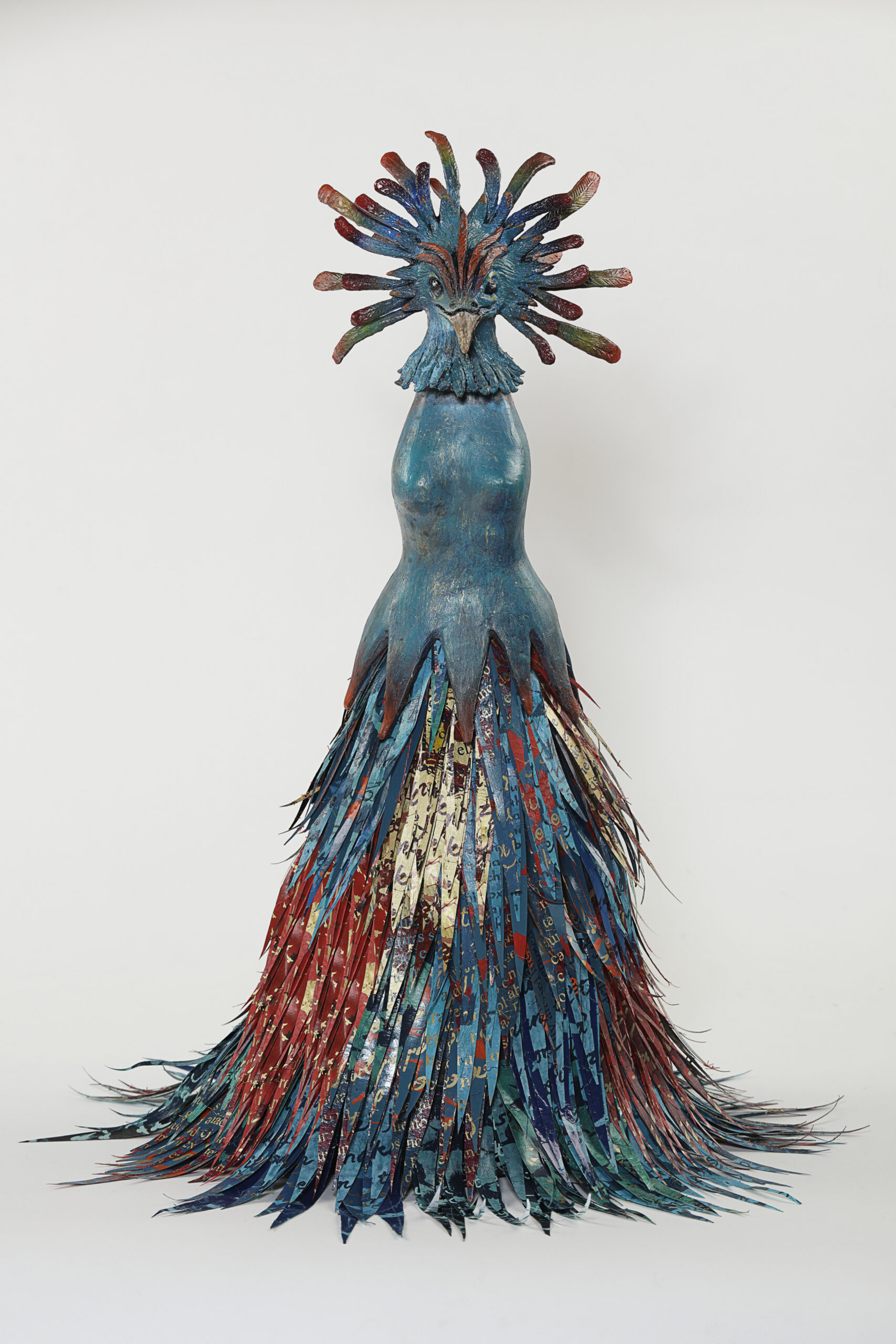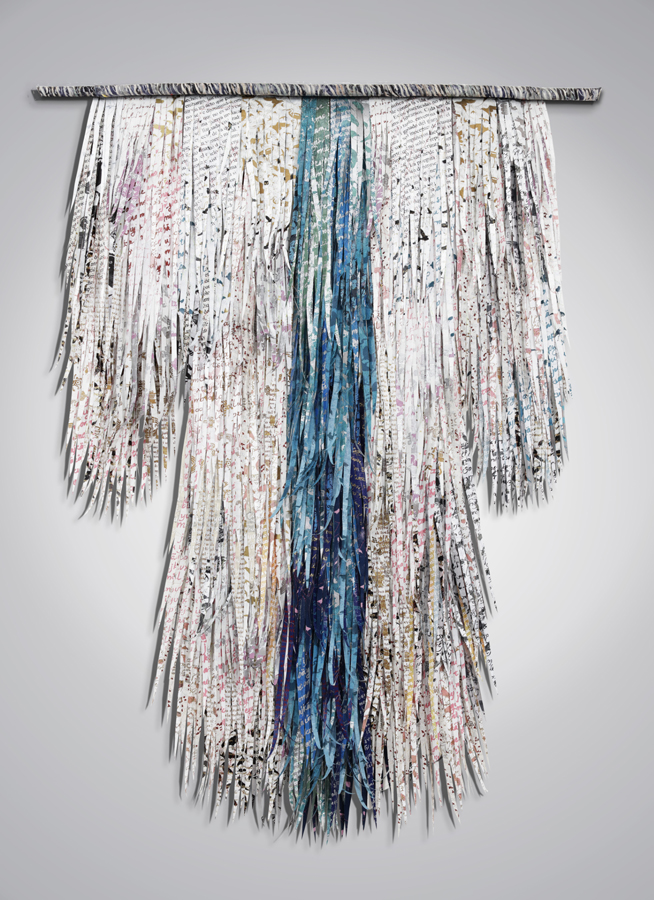
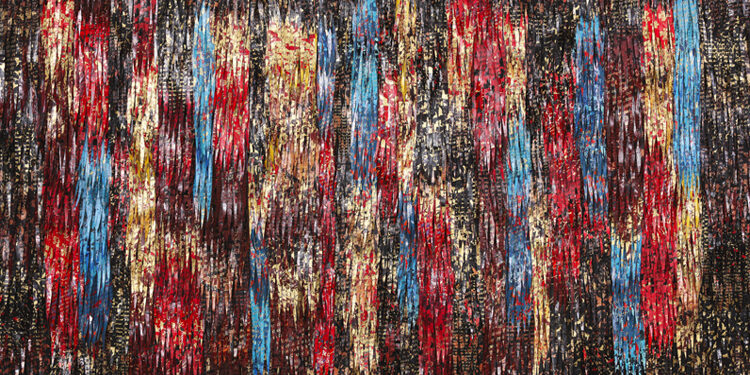
What looks like feathers is actually recycled plastic.
For North Carolina environmental artist Deborah Kruger, the transformation is intentional.
Kruger uses one of the most ecologically destructive materials to create intricate feathered artworks honoring endangered birds, languages and cultures.
Her art reflects the losses caused by climate change, habitat fragmentation and human consumption.
Artist: Born and raised in New York City, Kruger learned to sew as a child by making all her own clothes. Her early sewing experience led her to the Fashion Institute of Technology in New York, where she earned a BS in textile design.
After graduation, Kruger worked as a wallpaper designer for eight years but found commercial art creatively stifling.
In order to create the flexibility she needed to be an artist and a mother, she started a medical billing company in Amherst, MA.
Though devoid of art, the job enriched Kruger with business skills, especially marketing and organization, which are now beneficial for her art career.
Kruger retired early, and moved to Durham, NC in 2014, to work as a full-time artist.
Studio: Deborah Kruger Studio is based in Durham at Ample Storage, which has an artist’s studio section. She also periodically works at a foundry in Zapopan, Mexico, to fabricate sculptures.
Art & materials: Large-scale environmental textile art, using recycled plastic to create hand-made feathers in her wall-hung art, installations and sculptures. Also sculptures of bird heads, which Kruger incorporates into her feathered work ($1,000 to $150,000).
“I use feathers the way painters use paint,” said Kruger. “They contain my color palette, which lately has been red, gold, black, burgundy and turquoise.”
Must-have tools: Sharp scissors and a sewing machine.
Inspirations: Contemporary textile artists, including:
- Magdalena Abakanowicz (Poland).
- Olga de Amaral (Colombia).
- El Anatsui (Nigeria).
- Rachid Koraichi (Algeria).
- Sheila Hicks (France).
Other influences:
- Rachel Carson’s book “Silent Spring.” Text from Carson’s book appears in Kruger’s feathers.
- Tikkun Olam, the Jewish concept of repairing and improving the world.
Special commission: A sculpture, “Phoenix Rising,” as part of the Oregon-based Pony Up! Project, a charity art initiative to support families recovering from gun tragedies. This sculpture inspired Kruger’s latest bird sculptures.
Recent awards/honors:
- Artist residency at the Wildacres Retreat, Little Switzerland, NC. 2025
- First Prize Winner at the Wynwood Juried Art Show, Miami, FL. 2024.
- Artist residency at the Icelandic Textile Center, Blonduos, Iceland. 2024
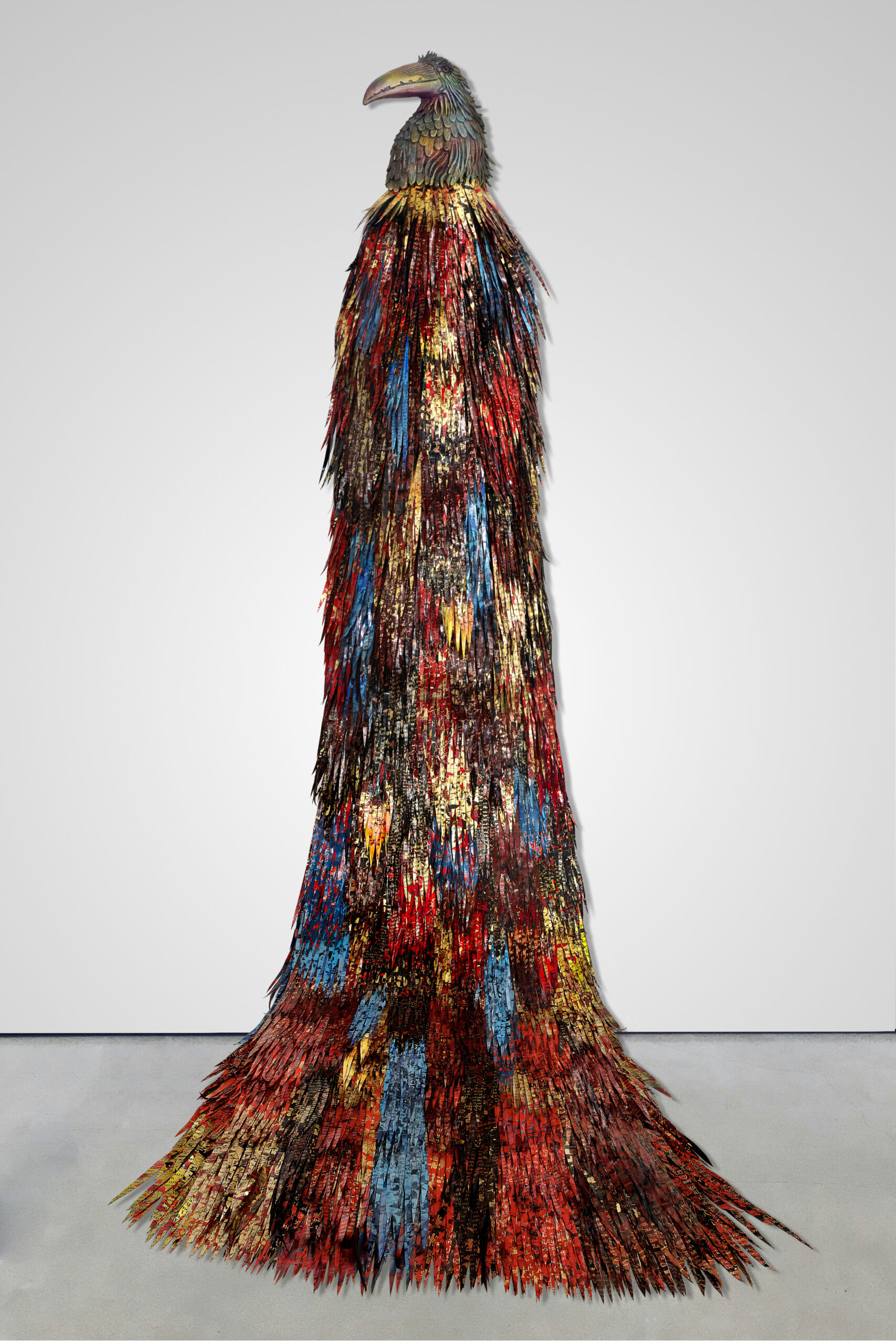
What’s new: “Cascade,” a 14-foot-long textile and sculptural piece that cascades down the wall onto the gallery floor.
Constructed in six zippered sections, the piece features a sculpted Collared Aracari bird head in fiberglass. This endangered bird is part of the toucan family native to Latin America.
“I have been dreaming about this idea of work spilling onto the floor for eight years,” said Kruger. “I am excited that I finally had the time to make it and the space to show it.”
Cascade is part of “Extinctions,” a solo exhibition of Kruger’s artwork, currently on view, at the Civico Museo Parisi Valle in Maccagno on Lake Maggiore, Northern Italy. The exhibit, which is Kruger’s European debut, runs through Oct. 25.
What’s next: “Feathered,” a solo exhibit at imperfecta gallery, Portland, OR. Nov. 5–28. The exhibit highlights her monumental textile art and endangered bird sculptures.
This downtown art and design gallery is focused on elevating women artists and underrepresented creatives.
Where to buy:
- Artist website: deborahkruger.com
- Imperfecta gallery, Portland, OR.
- Opul Mkt, New York City, NY.
See a complete list at the artist’s website.
Connect:
- Instagram: @deborahkrugerstudios.
- Facebook: Deborah Kruger.
- Linkedin: deborahkruger53
- YouTube: DeborahKruger